
Exhibition Recaps
Notes from Tokyo: What We Learned at Design Festa Vol. 63
18 OCT 2026 · 7 min read
Two days at Tokyo Big Sight reminded us that exhibitions are about more than showing creative work. They are about the small moments when a creation meets someone new.
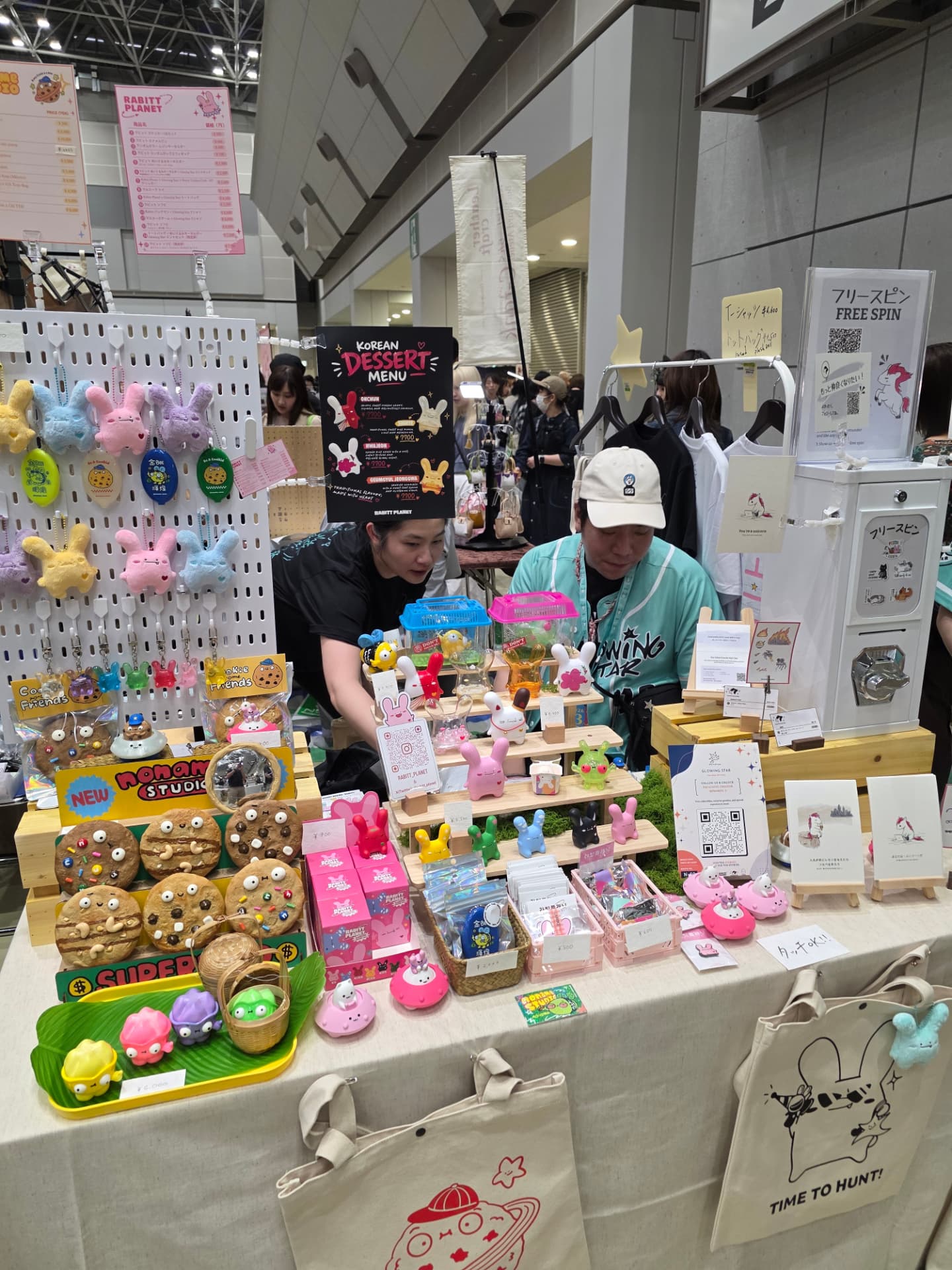
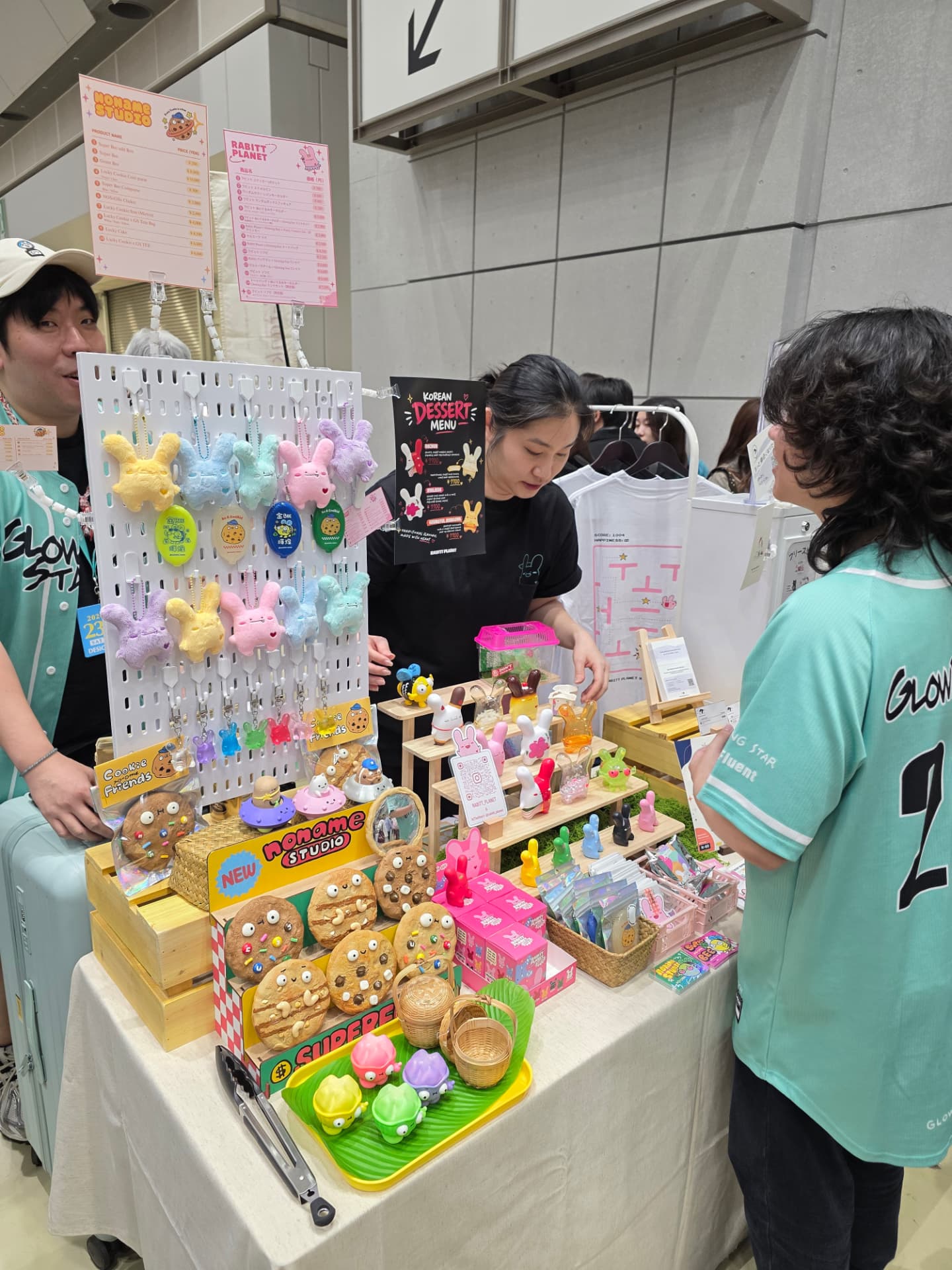
In May 2026, Glowing Star joined Design Festa Vol. 63 at Tokyo Big Sight, bringing together original creations from independent artists.
For two days, we found ourselves surrounded by illustrations, handmade objects, character designs, and people who had travelled to discover something new. Every aisle seemed to lead to another creative world, each with its own personality and story.
We went to Tokyo hoping to introduce more people to the creators we work with. But we also came home with something we did not expect to value quite as much: a better understanding of what happens between a person noticing a creation and deciding to connect with it.
Some of our most useful lessons came from very small moments.
A Crowded Exhibition Does Not Guarantee Attention
Walking through Design Festa, it was easy to be impressed by the number of people, booths, and creations filling the venue.
Yet standing behind a booth gave us a different perspective.
People might pass by, glance at a table, and continue walking without stopping. Others would slow down, look at something for a few seconds, and leave without asking a question.
Being surrounded by visitors is not the same as being discovered by them.
This became one of our biggest reflections from the event.
When someone walks past dozens of creative displays, they have only a brief moment to decide what deserves their attention. A booth needs to communicate something interesting before the visitor has even learned who the creator is.
We noticed that displaying too many different products at once could make a table harder to understand. Several interesting creations might compete for attention, leaving visitors unsure where to look first.
It made us wonder whether the better approach was not to display more, but to give each creation enough space to be noticed.
Sometimes, a single character, a clear visual identity, or an unexpected detail can say more than an entire table filled with products.
The Moment Someone Starts to Interact
One of our favorite things about independent creative products is that not everything can be understood at first glance.
Some creations reveal their personality through their shape or expression. Others make sense only when someone picks them up, presses something, or sees how they work.
We saw this with interactive products at our booth.
At first, some visitors looked at the products without realizing they could be played with. Their unusual design attracted curiosity, but their intended interaction was not immediately obvious.
Once a simple explanation or demonstration was introduced, it became easier for visitors to understand what made them special.
That small difference was memorable.
Sometimes, the challenge is not getting people interested in a creation. It is helping them discover what makes it interesting.
A short demonstration, an invitation to try something, or even a few carefully chosen words can turn a passing glance into a conversation.
And a conversation can be valuable even when it does not lead to a purchase.
For independent creators, that might be the beginning of someone remembering their character, following their work, or coming back at another exhibition.
The Story Does Not End with the Product
We also spent time observing how visitors responded to different ways of presenting creative work.
One detail stood out: packaging.
Some products attracted more attention when they were presented in a box or clear packaging. The presentation made them feel more complete and helped visitors imagine them as collectibles or gifts.
The same creation can feel quite different depending on how someone first encounters it.
A small box might suggest that something special is waiting inside. A transparent package can make a playful detail visible. A short description can introduce the character or idea behind the object.
These details do not replace the creativity of the artist. They help people understand and appreciate it.
We also noticed the importance of making practical information easy to find.
When prices were difficult to see, or differences between product versions were unclear, visitors sometimes hesitated.
Not everyone feels comfortable asking questions at a booth, especially when they are unfamiliar with the creator.
Clear information creates room for a more relaxed experience.
It allows visitors to explore at their own pace, without feeling that every interaction needs to become a sales conversation.
Good presentation should make creativity easier to approach, not more complicated to understand.
The Work Nobody Sees
An exhibition might last only two days, but the preparation begins much earlier.
Long before visitors arrive, someone needs to coordinate products, prepare inventory, arrange logistics, plan the display, organize prices, and make sure the people working at the booth understand what they are presenting.
These tasks are rarely visible to the public.
Yet a missing price tag, an unclear explanation, or a product placed in the wrong corner can change how someone experiences the creator's work.
Design Festa reminded us how much the small operational decisions matter.
For independent creators, this can become a difficult balance.
The same person who spends hours developing a character or making an object may also need to handle emails, shipping, promotional content, event applications, and customer questions.
None of these responsibilities is unimportant. But every hour spent coordinating them is an hour that cannot be spent creating.
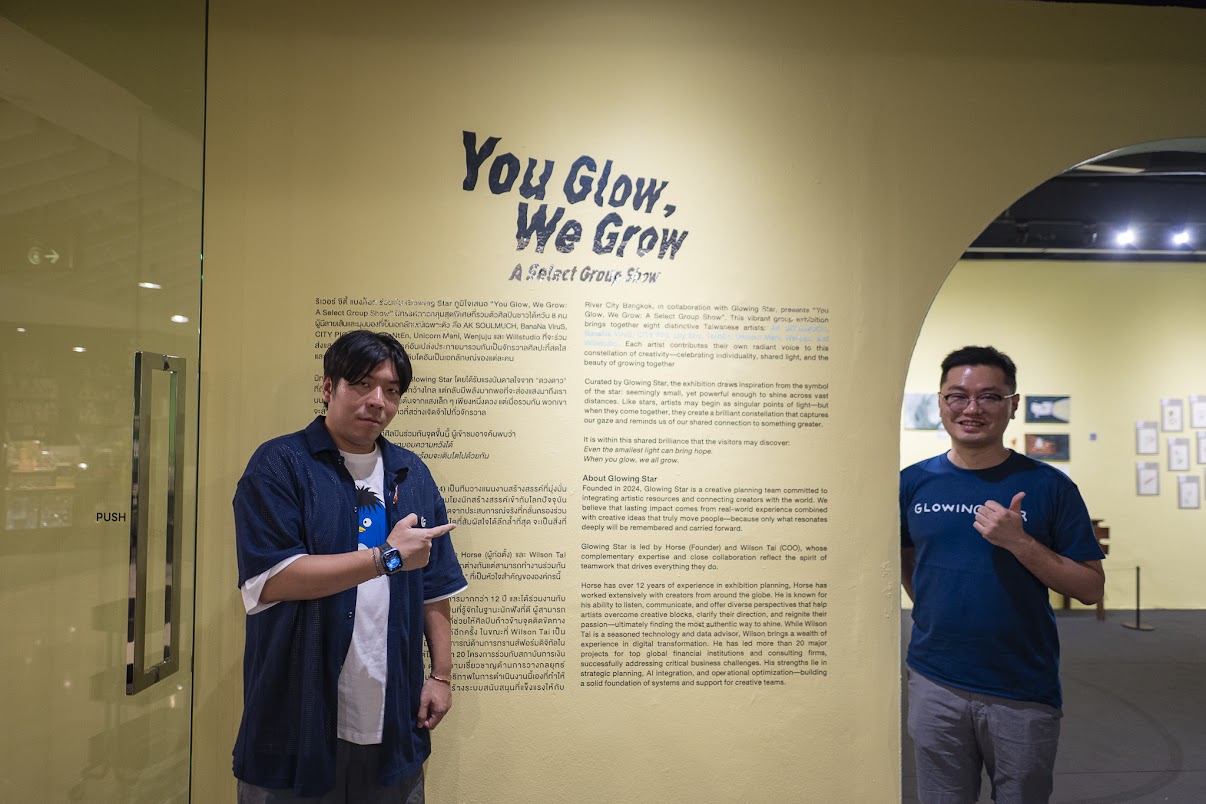
This is one of the reasons we started Glowing Star.
We believe creators deserve more time to focus on their creative work, while having trusted support for the business and operational responsibilities that come with sharing it.
Behind the scenes, we are also exploring how better workflows and technology can make that support more consistent and scalable.
Not to replace the human relationships that make independent art special, but to give creators and the people supporting them more room to do meaningful work.
What We Are Taking into the Next Exhibition
Every exhibition is different.
A lesson from Tokyo might work differently in Taipei, Bangkok, or Hong Kong. Different audiences come with different expectations, interests, and ways of discovering new work.
So rather than turning two days of observations into a fixed formula, we want to treat them as a starting point for further experiments.
Here are a few things we want to carry forward:
- Make the first impression clearer. Give each booth a recognizable visual focus instead of asking too many products to compete for attention.
- Invite people to interact. When a creation has something playful or unexpected about it, make that experience easy to discover.
- Treat presentation as part of storytelling. Packaging, signage, and product information should help people understand the work.
- Prepare the people behind the booth. A thoughtful introduction can help a creator's story travel further, even when the creator cannot be there in person.
- Keep learning from the real world. Observe what happens, listen to visitors, and use those lessons to improve the next event.
These are not universal rules. They are questions and working ideas we want to keep testing.
Until the Next Encounter
We left Tokyo with new ideas, fresh questions, and a longer list of things we want to try.
Perhaps that is one of the most valuable things an exhibition can offer.
Beyond the sales, photos, and busy aisles, it gives us a chance to understand how creative work connects with people.
And sometimes, the most important discovery is not a product someone buys, but a small moment that helps us see a familiar problem differently.
At Glowing Star, we want to keep learning from those moments, and use what we learn to help more independent creators bring their worlds to new audiences.
You Glow, We Grow.
Related to this story
More stories
Stay close to the work
Creator updates, product drops, exhibitions and new stories, in one quiet email.