
Industry Observations
The First Three Seconds: What Makes Someone Stop at a Creator Booth?
18 OCT 2026 · 5 min read
At a busy creative fair, good work can still go unnoticed. Two days at Design Festa Vol. 63 showed us how much the layout of a booth shapes that first glance.
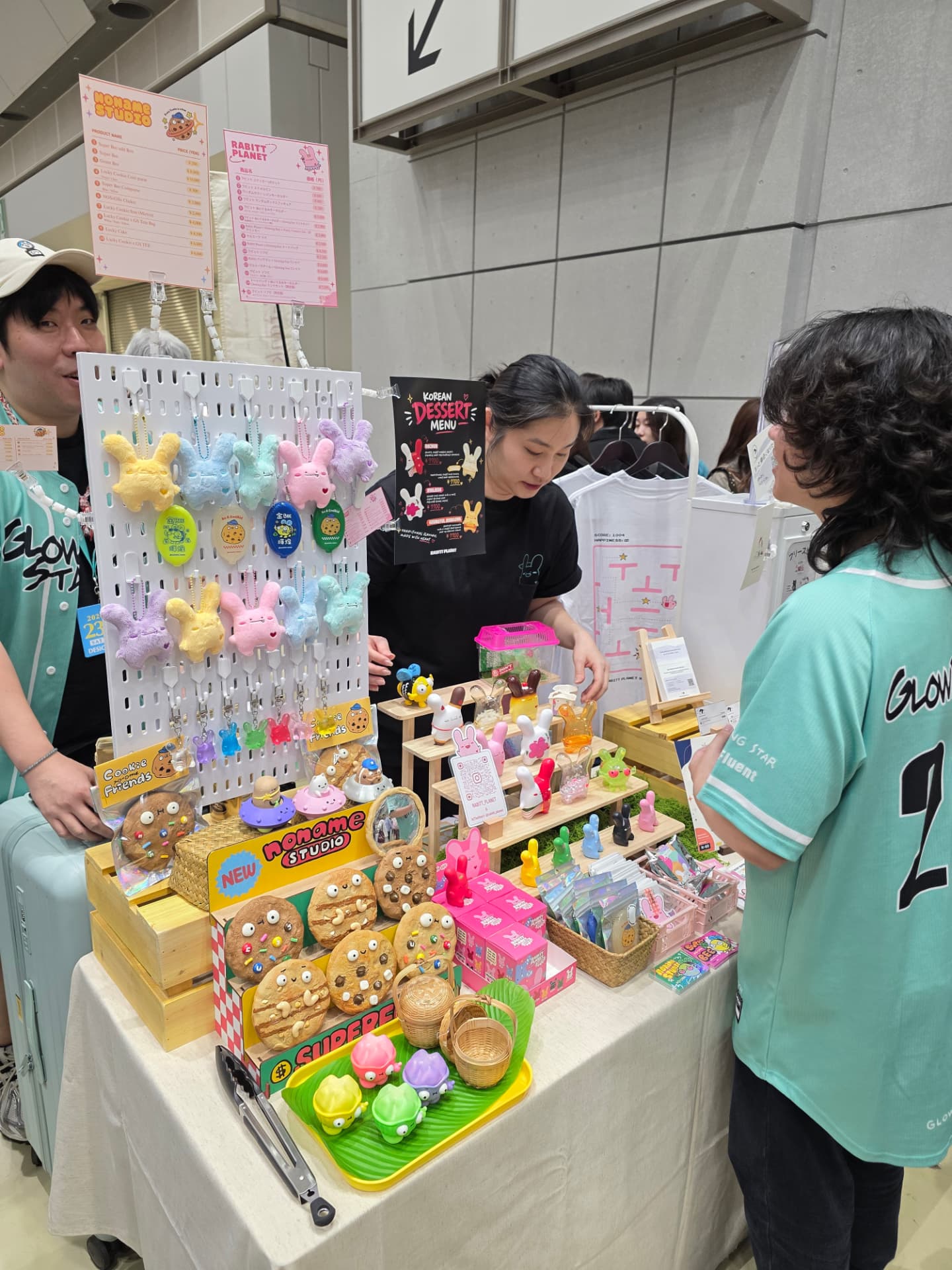
Picture yourself walking down an aisle at a creative fair in Tokyo.
On both sides, original characters, handmade objects and bright displays are all trying to catch your eye. Every few steps there's another creator with a completely different style.
You can't stop at every booth. Nobody can. So you keep walking, and slow down only when something grabs you.
For the creator behind the table, that moment is everything.
At Design Festa Vol. 63 at Tokyo Big Sight in May 2026, we spent two days watching how people moved past our shared booth. One question kept coming up between us: what makes someone stop?
Not buy. Just stop, and take a closer look.
Getting noticed comes first
A huge crowd doesn't mean every booth gets looked at. We watched plenty of people glance at our table and keep walking.
So the bigger opportunity was earlier than we'd thought: getting more people interested in the first place.
It helped to break that moment into three quick steps:
- Notice. Something catches their eye.
- Understand. They get a rough idea of what they're looking at.
- Approach. Something gives them a reason to step closer.
If the first step doesn't happen, the other two never get a chance. And the booth has to pull it off for someone who has never heard of the creator and has a hundred other things to look at.
Too many good things at once
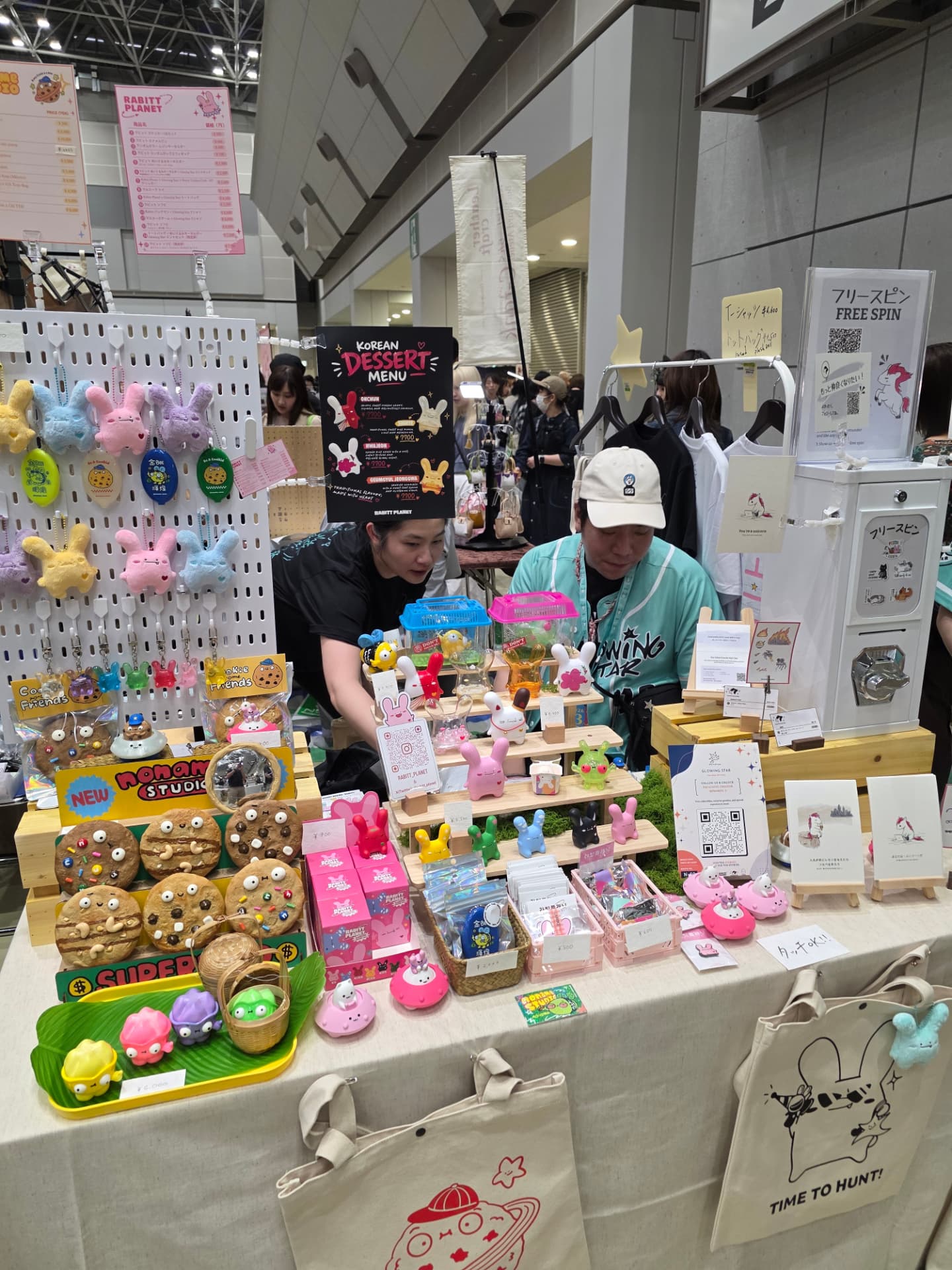
Our shared booth brought together several creators with very different styles. Each one worked well on its own. Side by side, they competed.
From the aisle, people saw a busy mix of objects instead of one world they wanted to step into.
We'd gone in treating table space as something to fill. More products, more chances for someone to find something they like. In practice, more choice made people work harder to figure out what they were looking at.
A shared booth can still work. The table just needs an order: one character as the anchor, a few related pieces around it, and everything else for people who have already stopped.
Look at it from the aisle
We'd expected the corner of our booth, right next to the passing crowd, to do well. It didn't. The pieces there weren't making people stop, and at times people standing nearby, our own team included, blocked the view.
A corner spot only helps if people can see something good from where they're walking.
It's natural to set up a booth from behind the table, facing the products. From there everything looks balanced. Visitors come in at an angle, see only part of the table, and often have someone standing in the way.
Next time, before the doors open, we'll walk past the booth from both directions and ask:
- What's the first thing people see?
- Can they tell what the booth is about before they reach the table?
- Is anything, or anyone, blocking the view?
Use the space above the table
Most independent creators get a small table and not much else. That makes height valuable.
At Design Festa we leaned too much on the tabletop. Details that were clear up close disappeared from a few steps away, and many people decide to keep walking before they get that close.
A backdrop, a raised display or a large image of the main character can tell people from a distance what kind of world this is. Playful characters, collectible toys, a distinctive illustration style.
They don't need the full story yet. Just enough to get curious.
Stopping isn't the same as buying
Once someone stops, the next step is helping them engage. Interactive pieces showed us this clearly. They looked like ordinary objects until someone showed how they worked.
So we started thinking of the booth as a sequence rather than a shelf. A strong visual makes people look. An easy-to-handle piece brings them closer. A quick demo starts a conversation.
None of that has to end in a sale. Someone might try a piece, smile, learn the creator's name and move on. For creators building an audience, that first encounter is often how people end up coming back.
What we'll test next
Two days at one fair isn't enough to call anything a rule. Location, crowd, neighbouring booths and even the time of day all play a part. So these are experiments for our next events:
- One clear anchor. A character, image or theme people can pick out quickly.
- Check the view from the aisle. Walk past from both sides instead of only standing behind the table.
- Less competition. Group products clearly so not everything fights for the same attention.
- An easy way in. Simple demos or displays that show what makes a piece fun.
- Better notes. Record what makes people stop and ask questions, then compare when we change the layout.
We're not trying to turn anyone's art into a sales formula. The point is to clear away whatever sits between the work and the people who might love it.
After the first three seconds
Looking back, the main thing we learned is simple: good work deserves to be understood.
Creators spend months, sometimes years, building their characters. At a fair, their first chance with a new person might be a passing glance. Thoughtful presentation gives that glance a better chance of turning into something more.
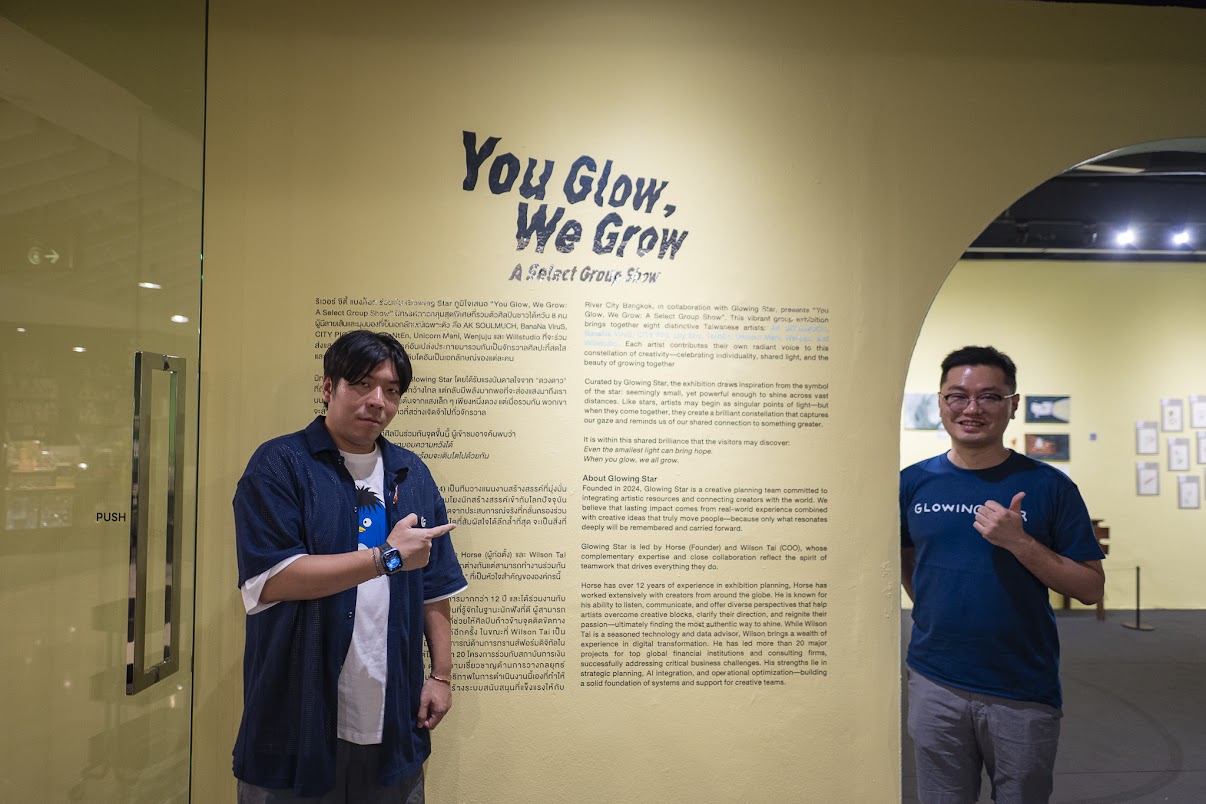
That's part of our job at Glowing Star. We help creators reach new places, and we keep getting better at the moment they first meet someone new.
Before anyone can fall for a piece of work, they need a reason to stop. Often that comes down to a small decision, like where something sits on the table.
You Glow, We Grow.
Related to this story
More stories
Stay close to the work
Creator updates, product drops, exhibitions and new stories, in one quiet email.